Liturgia e Sacramento | Duas Faces da Mesma Missão da Igreja

Liturgia e Sacramento | Duas Faces da Mesma Missão da Igreja

Liturgia e Sacramento
Duas Faces da Mesma Missão da Igreja
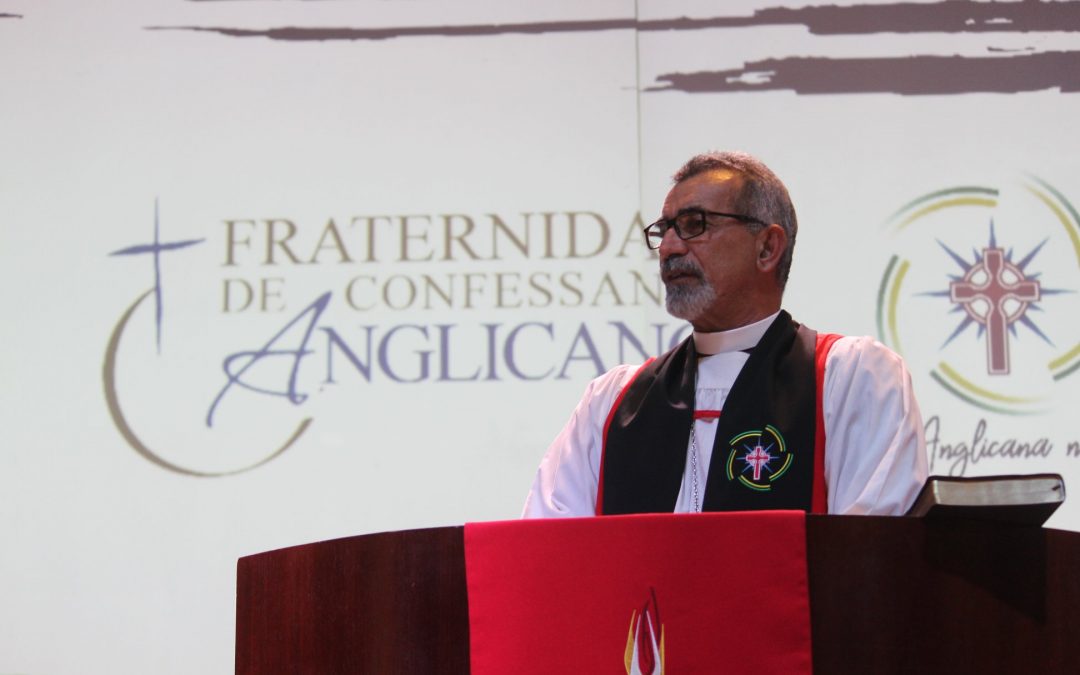
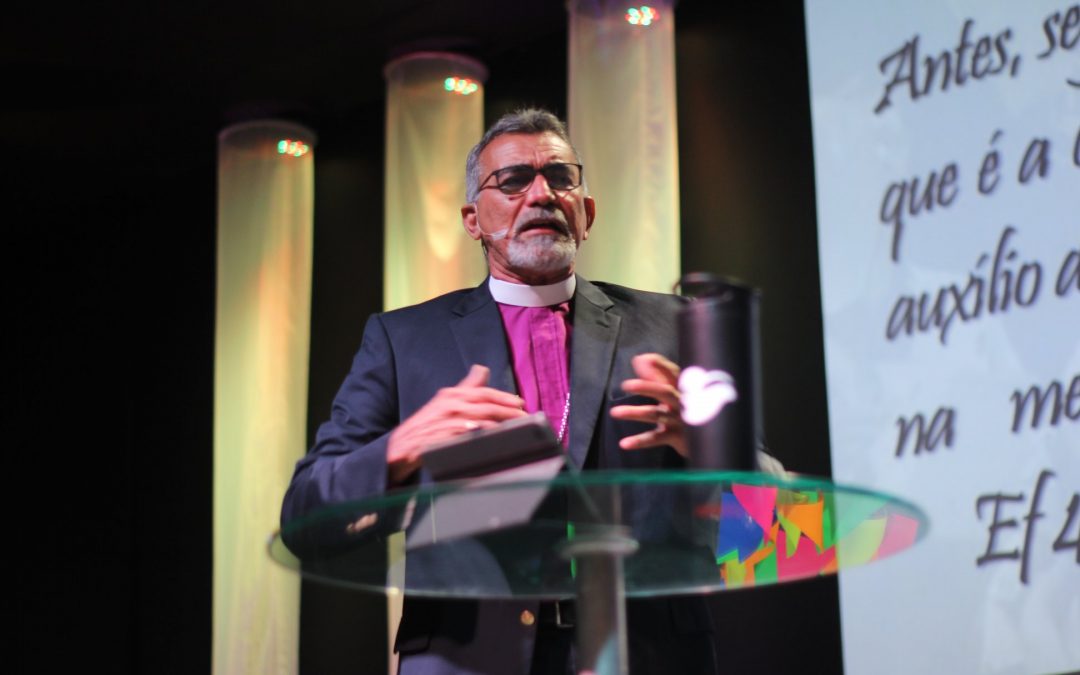
Miguel Uchoa*
 

  1. Introdução: A

forma e o mistério

Certa vez uma pessoa me abordou na igreja e fez a seguinte pergunta: “Bispo, por que nossos cultos não são mais sacramentais?” Respondi inicialmente perguntando: “O que você de fato quer dizer com ‘mais sacramentais?” e ele com sinceridade disse: “uma celebração usando mais a liturgia” percebi que se eu continuasse perguntando, ele continuaria se colocando equivocadamente e aquela conversa não teria um fim proveitoso pois seguiria com interrogações, por isso adiantei: será que você não está se referindo a uma celebração mais formal, usando mais os formulários litúrgicos, as vestes etc.? ele rapidamente afirmou: sim, é isso mesmo que quero dizer! Havia uma confusão na mente daquele rapaz; ele confundia liturgia com sacramento, o que é muito comum.

 A Igreja sempre reconheceu que o culto cristão é o centro da vida e da missão. É no culto que a comunidade se reúne não apenas para recordar, mas para viver e experimentar a presença real do Cristo ressuscitado, tornando-se participante ativa de Sua graça e de Sua obra redentora. O culto é, assim, o ponto de encontro entre o divino e o humano, onde a fé da Igreja se manifesta de forma concreta e visível.

 No entanto, ao longo da história, tornou-se comum confundir “liturgia” com simples “ritualismo”, ou seja, enxergar a ordem e a forma do culto apenas como práticas exteriores, desprovidas de significado profundo. Da mesma forma, “sacramento” muitas vezes foi reduzido a uma “cerimônia”, como se fosse apenas um ato simbólico, separado da ação efetiva da graça de Deus. Essas reduções empobrecem a experiência cristã, pois tiram do culto seu caráter de encontro vivo com o mistério de Deus e de participação efetiva na missão da Igreja.

 Para o bem da missão cristã, é fundamental esclarecer essa confusão: a liturgia, quando autêntica, é expressão da fé celebrada, e os sacramentos são sinais visíveis da graça invisível. Integrar liturgia e sacramento significa unir forma e mistério, ordem e presença, tornando o culto um espaço de transformação, onde a comunidade é fortalecida para viver e testemunhar o Evangelho no mundo.

“A liturgia é a fé celebrada; os sacramentos são a graça experimentada.”

Gregory Dix, The Shape of the Liturgy (1945)

 “Deus é espírito, e importa que os seus adoradores o adorem em espírito e em verdade.” (João 4:24)

 O que é um Culto Litúrgico

 O termo liturgia (do grego leitourgia) significa “obra do povo”. No contexto cristão primitivo, designava a ação comunitária de adoração, como descrita em Atos 2:42,“E perseveravam na doutrina dos apóstolos, na comunhão, no partir do pão e nas orações.” 

“A liturgia é o serviço do povo de Deus ao seu Senhor, em resposta à Sua Palavra e às Suas obras.”
John Stott, The Contemporary Christian (1992)

 O culto litúrgico é, portanto, a adoração ordenada pela Igreja. Ele pode ocorrer com ou sem celebração sacramental, mas sempre mantém a forma, a reverência e a coerência com a fé apostólica, e é que segue uma estrutura histórica e teológica de oração, com base nas Escrituras e na tradição apostólica e reflete o entendimento de que a adoração é uma obra do corpo de Cristo, não apenas de um indivíduo.

A Liturgia contempla os aspectos que facilitam o nosso “serviço” a Deus como” Adoração – Confissão – Intercessões – Leitura da Palavra de Deus – Exposição da Palavra (Homilia) – Eucaristia (quando houver). Esses elementos, realizados em diferentes formas e estilos, compõem a liturgia, o serviço que prestamos a Deus. Não há culto que não seja litúrgico, mas há liturgias mais ou menos elaboradas, mais ou menos históricas, mais ou menos contemporâneas.

  “A liturgia não é apenas palavras ditas, mas a vida da Igreja em oração, conduzida pelo Espírito Santo.”

Livro de Oração Comum, Prefácio da Eucaristia

 O Livro de Oração Comum é a expressão clássica desse princípio: um modelo de adoração que envolve toda a comunidade, com orações, leituras bíblicas, confissão, absolvição e bênção.

Exemplo: 

  • Ofício Matutino e Vespertino
  • Liturgia Eucarística
  • Celebrações de Batismo, Matrimônio e Confirmação

 Um culto pode ser litúrgico mesmo sem celebrar um sacramento, por exemplo, um Ofício de Ação de Graças ou um culto matutino dominical. Para combater o liturgismo e o engessamento” das celebrações o “gênio” Thomas Cranmer incluiu um artigo (34º) nos 39 artigos de religião, ponderando o bom senso e apelo à diversidade 

  1. O que é um Culto Sacramental

 O culto sacramental é aquele em que há mediação visível da graça, por meio de sinais instituídos por Cristo. Os sacramentos são atos de Deus que utilizam elementos criados para comunicar Sua presença redentora.

“O sacramento é um sinal visível de uma graça invisível, instituído para nos santificar.”, Santo Agostinho, Sermão 272

“Cristo está presente, não apenas espiritualmente, mas também de modo eficaz, em cada ato sacramental.”
,John Calvin, Institutes of the Christian Religion, IV.14 

O culto sacramental tem Cristo no centro, agindo pela Palavra e pelos sinais — água, pão, vinho, óleo — para alimentar, purificar e enviar o seu povo. 

“Este é o meu corpo… este é o meu sangue… fazei isto em memória de mim.” (Lc 22:19–20) 

O culto sacramental é aquele que tem como centros teológicos e espirituais a celebração dos sacramentos instituídos por Cristo, especialmente o Batismo e a Santa Ceia.
Nele, a ênfase está na mediação visível da graça invisível.

 Segundo Santo Agostinho, “O sacramento é um sinal visível de uma graça invisível.” Nessa perspectiva, o culto sacramental não é apenas um ato simbólico, mas uma encarnação da graça, um meio pelo qual o Espírito Santo comunica a presença de Cristo ao seu povo.

 Assim, o culto sacramental é o espaço da presença eficaz de Cristo, não por mágica, mas pela fé e pela promessa da Palavra.

Por que dizem “esse culto é mais sacramental”?

Essa expressão geralmente aparece quando há:

  • Maior presença simbólica (cruz, altar, vestes, incenso);
  • Ênfase na Eucaristia como ápice da adoração;
  • Valorização dos gestos litúrgicos (ajoelhar, curvar-se, reverência).

Mas isso não significa que seja “mais espiritual” ou “mais santo”. Significa apenas que há mais evidência sacramental da fé, ou seja, o culto expressa visivelmente o mistério da graça.


  1. Distinções Essenciais


Aspecto

Culto Litúrgico

Culto Sacramental

Origem

Prática apostólica e tradição da Igreja

Instituição direta de Cristo

Ênfase

Ordem e forma da adoração

Mediação da graça

Elemento central

Estrutura de oração e louvor

Os sacramentos (Batismo e Eucaristia)

Exemplo

Ofício Divino, Orações Diárias

Santa Ceia, Batismo

Efeito espiritual

Comunhão e formação da fé

Renovação e nutrição da graça

Risco

Formalismo

Sacramentalismo


Referências:

  • Cranmer, Thomas. Livro de Oração Comum 1552
  • Hooker, Richard. As Leis da Política Eclesiásticas, Livro V.
  • J. I. Packer. “The Gospel in the Liturgy,” em A Quest for Godliness (1990). 
  1. Liturgia ≠ Sacramentalismo

 O sacramentalismo surge quando se atribui poder mágico ao rito, esquecendo-se de que Cristo é o agente da graça.

“Não é o rito que salva, mas a fé que recebe o Cristo que o rito anuncia.” Martinho Lutero, Catecismo Maior, sobre o Batismo.

A verdadeira liturgia é a forma encarnada da fé. Ela não substitui a presença de Deus, mas a expressa. Um culto pode ser litúrgico e vazio se faltar fé, ou simples e poderoso se o Espírito agir. Da mesma forma, pode conter um sacramento e tornar-se sem sentido se aquele sacramento não for compreendido e acatado como missão. Nunca podemos esquecer que o sacramento é uma ordenança; há um comando a ser realizado e um propósito a ser cumprido.

 “Este povo me honra com os lábios, mas o seu coração está longe de mim.” (Isaías 29:13)

  1. Por que dizem “esse culto é mais sacramental”?

 Essa expressão geralmente se refere a cultos que:

  • Valorizam os sinais sensíveis da fé (cruz, altar, incenso, velas);
  • Destacam a Eucaristia como ápice da adoração;
  • Expressam a sacralidade do tempo e do espaço.

 Mas ser “sacramental” não é ser “mais formal”, é viver a presença da graça de Deus mediada por meios visíveis.

“O mundo é o grande sacramento de Deus. Cada ato da Igreja deve revelar o invisível através do visível.”,

Alexander Schmemann, For the Life of the World (1973) 

  1. Aplicação Pastoral e Missionária

 Os ministros(as) devem ensinar que:

  • A Liturgia é a expressão ordenada da fé.
  • O sacramento é o encontro eficaz com a graça;
  • A missão da Igreja é tornar o mundo sacramental, isto é, tornar a graça visível em tudo o que faz.

 “Tudo seja feito com decência e ordem.” (1 Coríntios 14:40)

“Ide, portanto, e fazei discípulos, batizando-os…” (Mateus 28:19)

 “A Igreja não é apenas um povo com uma missão, mas um povo que é missão, um sacramento vivo da presença de Cristo no mundo.”  John Zizioulas, Being as Communion (1985)

  1. Conclusão

 Liturgia e sacramento caminham juntos como forma e substância da adoração cristã. A liturgia ordena; o sacramento vivifica. A forma sem vida é ritualismo; a vida sem forma é confusão. Mas a forma cheia de vida é adoração em espírito e em verdade. são duas faces de uma mesma moeda: a missão sacramental da Igreja no mundo. A Igreja é litúrgica porque adora com ordem; é sacramental porque é sinal e instrumento da graça de Deus no mundo. Separar as duas dimensões empobrece a fé; integrá-las faz o corpo de Cristo brilhar com toda a sua beleza e poder.

Que cada culto seja uma celebração ordenada e viva, onde a forma exprima o mistério e o mistério santifique a forma

“Na liturgia, o céu toca a terra.”

John Chrysostom, Homilias sobre Isaías


 Referências

  1. Agostinho de Hipona. Sermones 272–275.
  2. Thomas Cranmer. The Book of Common Prayer, 1552.
  3. Richard Hooker. Laws of Ecclesiastical Polity, Livro V.
  4. John Calvin. Institutes of the Christian Religion, IV.14–17.
  5. Dom Gregory Dix. The Shape of the Liturgy. London: Dacre Press, 1945.
  6. Alexander Schmemann. For the Life of the World. St. Vladimir’s Seminary Press, 1973.
  7. John Zizioulas. Being as Communion. St. Vladimir’s Seminary Press, 1985.
  8. J. I. Packer. A Quest for Godliness. Crossway, 1990.
  9. John Stott. The Contemporary Christian. IVP, 1992.
  10. Martinho Lutero. Catecismo Maior, seção sobre o Batismo e a Ceia.

Mordomia e Compromisso com a Obra de Deus: A Voz de Ageu para o Nosso Tempo.

Mordomia e Compromisso com a Obra de Deus: A Voz de Ageu para o Nosso Tempo.

Mordomia e Compromisso
com a Obra de Deus: A Voz
de Ageu para o Nosso Tempo
Miguel Uchoa*

O profeta Ageu viveu num tempo em que o povo de Deus havia perdido o foco. Depois de anos de exílio, a nação retornou a Jerusalém com a missão de reconstruir o templo, mas logo se acomodou. O altar estava parado, e cada um cuidava apenas da própria casa (Ageu 1:4). A mensagem de Ageu é, portanto, uma convocação à mordomia espiritual e ao compromisso com o Reino, temas tão urgentes hoje quanto há 2.500 anos.

Quando a prioridade se perde, a bênção se interrompe

 “Vocês esperavam muito, e eis que veio a ser pouco… Por qué? Diz o Senhor dos Exércitos. Por causa da minha casa, que ainda está em ruínas, enquanto cada um de vocês corre para a sua própria casa. “ Ageu 1:9, NVI.

 A negligência espiritual descrita por Ageu não é diferente da que pode ocorrer em nossos dias. Vivemos tempos de correria, em que o urgente toma o lugar do importante. Muitos servos de Deus estão cansados, não por excesso de serviço, mas por falta de propósito eterno em tudo o que fazem.

 Como disse Eugene Peterson, pastor e autor da Bíblia A Mensagem: “O maior perigo da igreja moderna é fazer as coisas certas pelas razões erradas.” É possível servir muito e, ainda assim, estar longe da vontade de Deus. Quando nossa prioridade deixa de ser o Senhor e Seu Reino, o resultado é o mesmo do tempo de Ageu: esforço sem fruto e ativismo sem presença. A verdadeira mordomia começa quando reconhecemos que tudo o que temos e fazemos existe para a glória de Deus, não para nossa conveniência.

O chamado à reconstrução: arrependimento e ação

 “Agora, pois, assim diz o Senhor dos Exércitos: Vejam onde os seus caminhos os levaram! “Ageu 1:5, NVI 

Deus não repreende para destruir, mas para restaurar. O chamado de Ageu é uma convocação ao arrependimento prático, voltar a colocar Deus no centro das decisões, do tempo, dos recursos e das prioridades. Como ensina John Stott, em O Discípulo Radical: “O arrependimento verdadeiro não é apenas um lamento pelo passado, mas uma mudança de direção para o futuro.” A mordomia, portanto, é o ato de reconhecer a soberania divina sobre tudo o que somos e possuímos. Quando nos dispomos a obedecer, Deus mesmo desperta o nosso espírito, assim como fez com Zorobabel, Josué e o povo (Ageu 1:14).A verdadeira transformação espiritual nunca começa de fora para dentro, mas do coração para as mãos, do altar para o trabalho.

Quando há obediência, vem a restauração

 “A glória desta última casa será maior do que a da primeira, diz o Senhor dos Exércitos; e neste lugar darei paz.” Ageu 2:9, NVI

 Deus prometeu que a glória seria maior, não porque o novo templo fosse mais bonito, mas porque a presença do Senhor estaria no meio do povo obediente. Essa é a recompensa da fidelidade: a manifestação da presença divina. Hoje, a Igreja é o templo vivo. E cada líder, cada voluntário, cada dizimista fiel é uma pedra nessa edificação. Quando a casa de Deus é cuidada com fidelidade, a bênção transborda também para as casas individuais. Como afirmou o teólogo Timothy Keller: “A mordomia cristã é o reconhecimento de que a vida não é sobre o quanto possuímos, mas sobre a quem pertencemos.” Obedecer é investir no que permanece. E quando fazemos isso, o mesmo Deus que restaurou Jerusalém restaura hoje famílias, ministérios e igrejas inteiras. A obediência traz consolo, prosperidade verdadeira e a paz que o dinheiro não pode comprar.

Aplicação para nós hoje

 O profeta Ageu continua falando com força à igreja contemporânea:

  • Priorizar o Reino é reordenar a vida à luz da eternidade.
  • A mordomia fiel é um testemunho contra a cultura do consumo e da pressa.
  • A obediência é o caminho mais curto entre o desânimo e a glória.

 O povo de Ageu descobriu que a fidelidade abre as comportas do céu, não apenas de recursos, mas também da presença do próprio Deus. E esse é o maior tesouro de todo servo fiel.


Conclusão


A mensagem de Ageu é uma exortação e uma promessa. Deus continua dizendo: “Vejam onde os seus caminhos os levaram”. Mas também continua prometendo: “A glória será maior”. Toda vez que um líder, um pastor ou um servo decide colocar o Reino em primeiro lugar, algo é reconstruído, dentro e fora da casa de Deus. E, no fim, o verdadeiro fruto da mordomia não é a prosperidade material, mas a paz que vem de saber que estamos cooperando com o plano eterno do Senhor.

“Busquem, pois, em primeiro lugar o Reino de Deus e a sua justiça, e todas essas coisas lhes serão acrescentadas.”Mateus 6:33, NVI


*++ Miguel Uchoa
Arcebispo e Primaz da Igreja Anglicana no Brasil  | Vice-Presidente do GAFCON
Fundador e Deão da PAES
(Catedral Nacional da Igreja Anglicana no Brasil)
Recife, 30 de outubro de 2025

Pronunciamento dos Primazes do GAFCON na memória dos 507 anos da Reforma Protestante

Pronunciamento dos Primazes do GAFCON na memória dos 507 anos da Reforma Protestante

“Amado, embora eu estivesse muito ansioso para escrever a você sobre nossa salvação comum, achei necessário escrever apelando para você para batalhar pela fé que de uma vez por todas foi entregue aos santos.” (Judas 3)

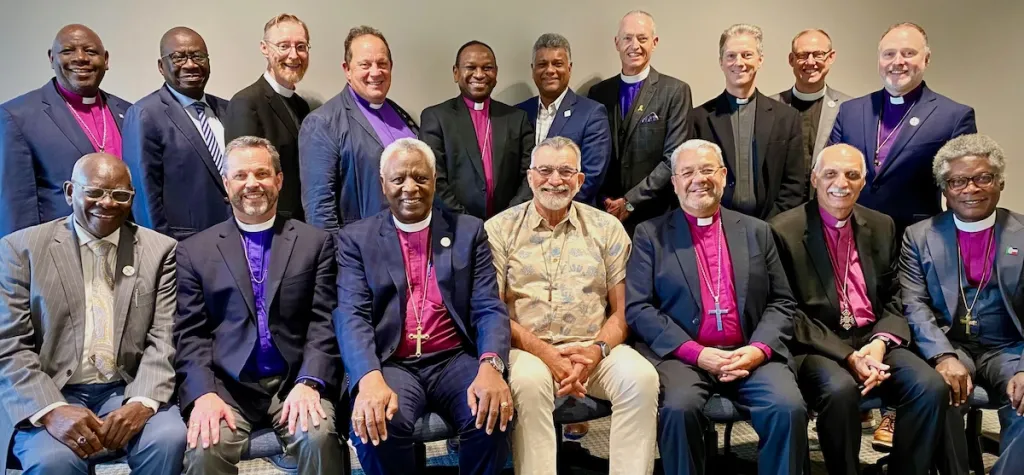
Nós, os Primazes do GAFCON, reunidos em Mount Pleasant, Carolina do Sul, para celebrar a investidura do Arcebispo Steve Wood como o terceiro Primaz da Igreja Anglicana na América do Norte (ACNA) e para recebê-lo como Primaz da Comunhão Anglicana, enviamos saudações aos fiéis. Gostaríamos de poder escrever para vocês sobre nossa grande alegria pela missão, evangelismo e plantação de igrejas, mas declarações recentes do Arcebispo de Canterbury exigem que mais uma vez abordemos um assunto urgente em torno da ética bíblica que confronta nossa amada igreja anglicana.

As recentes ações do Sínodo Geral da Igreja da Inglaterra, onde o Arcebispo Justin Welby defendeu a introdução de bênçãos do mesmo sexo na vida da Igreja da Inglaterra, estimulou o movimento GAFCON na redefinição contínua da Comunhão Anglicana. No entanto, o recente repúdio explícito do arcebispo Welby à doutrina cristã em sua entrevista no podcast da Grã-Bretanha, ‘The Rest is Politics’, ( O Resto é Política) nos levou a repetir nosso sério apelo ao seu arrependimento pessoal.

Nesta entrevista, ele afirma publicamente que:

“Toda atividade sexual deve estar dentro de um relacionamento comprometido e seja heterossexual ou gay. Em outras palavras, não estamos desistindo da ideia de que o sexo está dentro do casamento ou da parceria civil. Apresentamos uma proposta de que, onde as pessoas passaram por uma parceria civil ou casamento entre pessoas do mesmo sexo, casamento igualitário sob a Lei de 2014, elas devem poder ir ao seu local, a uma igreja, e ter um culto de oração e bênção para eles em suas vidas juntos.

Embora ele possa alegar não ter mudado a doutrina do casamento, o Arcebispo de Canterbury mudou comprovadamente a doutrina do pecado, promovendo a santificação do pecado por meio de uma bênção divina.

Isso é uma clara violação da Sagrada Escritura, que ensina inequivocamente que o único contexto adequado para a intimidade sexual é no relacionamento de um homem e uma mulher que se uniram em casamento. Todas as formas de intimidade sexual foram desse contexto são condenadas como imoralidade e são comportamentos dos quais o povo de Deus é regularmente chamado a se arrepender (1 Coríntios 6:9-10).

Também é uma clara violação da Resolução I.10 da Conferência de Lambeth de 1998, que rejeitou a “prática homossexual como incompatível com as Escrituras” e que o Arcebispo declarou em 2022 ser o ensinamento da Comunhão Anglicana, incluindo a Igreja da Inglaterra.

Somos guiados pelas solenes palavras de advertência de Jesus à Igreja de Tiatira, porque “eles toleram o ensino de Jezabel”, que endossa a imoralidade sexual. Somente o julgamento aguarda Jezabel e todos os que a seguem, a menos que se arrependam (Apocalipse 2:21-22; 22:15). Qualquer tolerância, muito menos endosso, da imoralidade está sujeita ao julgamento de Deus.

Por esta razão, em resposta aos seus comentários públicos, repetimos solenemente nosso apelo ao arcebispo Justin Welby para se arrepender pessoal e publicamente dessa negação de seus votos de ordenação e consagração, onde ele prometeu “ensinar a doutrina de Cristo como a Igreja da Inglaterra a recebeu”.

O GAFCON apoia todos os anglicanos fiéis, tanto aqueles que optaram por deixar as províncias estabelecidas onde a autoridade das Escrituras foi comprometida, quanto aqueles que optam por permanecer enquanto buscam reformar sua província por dentro.

Portanto, continuamos a defender a Rede Anglicana na Europa (ANiE) como a provisão estrutural autenticamente anglicana do GAFCON para aqueles que não podem, por consciência, permanecer dentro das estruturas históricas e revisionistas.

Além disso, expressamos nosso apoio à ALIANÇA ( The Alliance) enquanto eles buscam se manter firmes na defesa do casamento bíblico dentro da Igreja da Inglaterra, e estamos prontos para defendê-los, autenticá-los e apoiá-los.

Finalmente, declaramos novamente a todos aqueles na Inglaterra que “batalham pela fé que uma vez por todas foi entregue a todos os santos”, que vocês não estão sozinhos.

Conselho de Primazes do GAFCON

Dia da Reforma Protestante

31 de outubro de 2024

Para conferir o pronunciamento na integra dos Primazes do GAFCON, acesse o clicando no botão abaixo.

Para conferir o pronunciamento na integra dos Primazes do GAFCON, acesse o clicando no botão abaixo.

GAFCON IV – The Kigali Commitment

GAFCON IV – The Kigali Commitment

GAFCON IV – The Kigali Commitment

[Christ] is the head of the body, the church; he is the beginning and the firstborn from among the dead, so that in everything he might have the supremacy.  Colossians 1:18

Greetings from Kigali, Rwanda, where the fourth Global Anglican Future Conference (GAFCON) met from 17-21 April 2023, bringing together 1,302 delegates from 52 countries, including 315 bishops, 456 other clergy and 531 laity.

We were grateful for the extraordinary hospitality extended by Archbishop Laurent Mbanda and the Anglican Church of Rwanda. We were deeply saddened to hear the news of the loss of Laurent and Chantal’s son Edwin, and we continue to offer our prayers of comfort for the Mbanda family.

We were also privileged to be welcomed and addressed by the Prime Minister of the Republic of Rwanda, the Right Honourable Edouard Ngirente who spoke of the significance of our gathering.

Our conference theme for 2023 ‘To Whom Shall We Go?’ (John 6:68), along with our Bible studies in the Letter to the Colossians, focused our attention on Jesus, the one in whom all the fullness of God dwells in bodily form, the Lord of all creation and the head of his body, the church (Colossians 1:15-19; 2:9). 

Our Chairman in his opening address encouraged us to be a repenting church, a reconciling church, a reproducing church and a relentlessly compassionate church. This is the church we want to be. 

We were reminded that the purpose and mission of the church is to make known to a lost world the glorious riches of the gospel by proclaiming Christ crucified and risen, and living faithfully together as his disciples. 

Our Fellowship Together

We gave thanks for God’s goodness and faithfulness to the Gafcon movement since its inception in 2008, as we rejoiced in a new generation of emerging leaders. It is God who unites us to himself and to one other in the power of his Spirit (1 Corinthians 12:13). From the diversity of our different backgrounds and cultures we delighted in our unity in Christ and the love that we share. 

Many among us are from contexts of persecution or conflict and we know that as one part of the body suffers, we all suffer. Some were unable to attend the conference because of this. We prayed for our brothers and sisters in Sudan, and for the suffering church. We also heard testimony of the power of the gospel to transform lives even in these circumstances through the prayer, kindness and compassion of Christians. 

The Authority of God’s Word

The current divisions in the Anglican Communion have been caused by radical departures from the gospel of the Lord Jesus Christ. Some within the Communion have been taken captive by hollow and deceptive philosophies of this world (Colossians 2:8).  Such a failure to hear and heed God’s Word undermines the mission of the church as a whole. 

The Bible is God’s Word written, breathed out by God as it was written by his faithful messengers (2 Timothy 3:16). It carries God’s own authority, is its own interpreter, and it does not need to be supplemented, nor can it ever be overturned by human wisdom. 

God’s good Word is the rule of our lives as disciples of Jesus and is the final authority in the church.

It grounds, energises and directs our mission in the world. The fellowship we enjoy with our risen and ascended Lord is nourished as we trust God’s Word, obey it and encourage each other to allow it to shape each area of our lives.

This fellowship is broken when we turn aside from God’s Word or attempt to reinterpret it in any way that overturns the plain reading of the text in its canonical context and so deny its truthfulness, clarity, sufficiency, and thereby its authority (Jerusalem Declaration #2). 

The Current Crisis in the Anglican Communion

Despite 25 years of persistent warnings by most Anglican Primates, repeated departures from the authority of God’s Word have torn the fabric of the Communion. These warnings were blatantly and deliberately disregarded and now without repentance this tear cannot be mended.

The latest of these departures is the majority vote by the General Synod of the Church of England in February 2023 to welcome proposals by the bishops to enable same-sex couples to receive God’s blessing.  It grieves the Holy Spirit and us that the leadership of the Church of England is determined to bless sin.

Since the Lord does not bless same-sex unions, it is pastorally deceptive and blasphemous to craft prayers that invoke blessing in the name of the Father, Son and Holy Spirit. 

Any refusal to follow the biblical teaching that the only appropriate context for sexual activity is the exclusive lifelong union of a man and a woman in marriage violates the created order (Genesis 2:24; Matthew 19:4–6) and endangers salvation (1 Corinthians 6:9).

Public statements by the Archbishop of Canterbury and other leaders of the Church of England in support of same-sex blessings are a betrayal of their ordination and consecration vows to banish error and to uphold and defend the truth taught in Scripture.

These statements are also a repudiation of Resolution I.10 of the 1998 Lambeth Conference, which declared that ‘homosexual practice is incompatible with Scripture,’ and advised against the ‘legitimising or blessing of same sex unions’. This occurred despite the Archbishop of Canterbury having affirmed that ‘the validity of the resolution passed at the Lambeth Conference 1998, I.10 is not in doubt and that whole resolution is still in existence’. 

The 2022 Lambeth Conference demonstrated the deep divisions in the Anglican Communion as many bishops chose not to attend and some of those who did withdrew from sharing at the Lord’s table. 

The Failure of the Archbishop of Canterbury and the Other Instruments of Communion

We have no confidence that the Archbishop of Canterbury nor the other Instruments of Communion led by him (the Lambeth Conference, the Anglican Consultative Council and the Primates’ Meetings) are able to provide a godly way forward that will be acceptable to those who are committed to the truthfulness, clarity, sufficiency and authority of Scripture. The Instruments of Communion have failed to maintain true communion based on the Word of God and shared faith in Christ.

All four Instruments propose that the way ahead for the Anglican Communion is to learn to walk together in ‘good disagreement’. However we reject the claim that two contradictory positions can both be valid in matters affecting salvation. We cannot ‘walk together’ in good disagreement with those who have deliberately chosen to walk away from the ‘faith once for all delivered to the saints’ (Jude 3). The people of God ’walk in his ways’, ‘walk in the truth’, and ‘walk in the light’, all of which require that we do not walk in Christian fellowship with those in darkness (Deuteronomy 8:6; 2 John 4; 1 John 1:7).  

Successive Archbishops of Canterbury have failed to guard the faith by inviting bishops to Lambeth who have embraced or promoted practices contrary to Scripture. This failure of church discipline has been compounded by the current Archbishop of Canterbury who has himself welcomed the provision of liturgical resources to bless these practices contrary to Scripture. This renders his leadership role in the Anglican Communion entirely indefensible. 

Call for Repentance

Repentance defines and shapes the Christian life and the life of the church. Each day at the Conference, in response to God’s Word in Colossians, we were led in a time of repentance. 

Recognising our own sins, and in humility as forgiven sinners, we pray that those who have denied the orthodox Christian faith in word or deed would repent and return to the Lord (Jerusalem Declaration #13). 

Since those who teach will be judged more strictly (James 3:1), we call upon those provinces, dioceses and leaders who have departed from biblical orthodoxy to repent of their failure to uphold the Bible’s teaching. This includes matters such as human sexuality and marriage, the uniqueness and divinity of Christ, his bodily resurrection, his promised return, the summons to faith and repentance and the final judgment.

We long for this repentance but until they repent, our communion with them remains broken. 

We consider that those who refuse to repent have abdicated their right to leadership within the Anglican Communion, and we commit ourselves to working with orthodox Primates and other leaders to reset the Communion on its biblical foundations.

Support for Faithful Anglicans

Since the inception of Gafcon, it has been necessary for the Gafcon Primates to recognise new orthodox jurisdictions for faithful Anglicans, such as the Anglican Church in North America (ACNA), the Anglican Church in Brazil, the Anglican Network in Europe (ANiE), the Church of Confessing Anglicans Aotearoa New Zealand, and the Diocese of the Southern Cross. We encourage the Gafcon Primates to continue to provide such safe harbour for faithful Anglicans.

In view of the current crisis, we reiterate our support for those who are unable to remain in the Church of England because of the failure of its leadership. We rejoice in the growth of the ANiE and other Gafcon-aligned networks. 

We also continue to stand with and pray for those faithful Anglicans who remain within the Church of England. We support their efforts to uphold biblical orthodoxy and to resist breaches of Resolution I.10. 

Appropriate Pastoral Care

Aware of our own sin and frailty, we commit ourselves to providing appropriate pastoral care to all people in our churches. This is all the more necessary in the current context of sexual and gender confusion, made worse by its deliberate and systematic promotion across the world. 

Appropriate pastoral care affirms faithfulness in marriage and abstinence in singleness. It is not appropriate pastoral care to mislead people, by pretending that God blesses sexually active relationships between two people of the same sex. This is unloving as it leads them into error and places a stumbling block in the way of their inheriting the kingdom of God (1 Corinthians 6:9-11). 

We affirm that every person is loved by God and we are determined to love as God loves. As Resolution I.10 affirms, we oppose the vilification or demeaning of any person including those who do not follow God’s ways, since all human beings are created in God’s image. 

We are thankful to God for all those who seek to live a life of faithfulness to God’s Word in the face of all forms of sexual temptation. 

We pledge ourselves afresh to support and care for one another in a loving and pastorally sensitive way as members of Christ’s body, building one another up in the Word and in the Spirit, and encouraging each other to experience God’s transforming power as we walk by faith in the path of repentance and obedience that leads to fullness of life.

Resetting the Communion

We were delighted to be joined in Kigali by leaders of the Global South Fellowship of Anglican Churches (GSFA) and to host a combined Gafcon-GSFA Primates meeting. Together, these Primates represent the overwhelming majority (estimated at 85%) of Anglicans worldwide.

The leadership of both groups affirmed and celebrated their complementary roles in the Anglican Communion. Gafcon is a movement focused on evangelism and mission, church planting and providing support and a home for faithful Anglicans who are pressured by or alienated from revisionist dioceses and provinces. GSFA, on the other hand, is focused on establishing doctrinally based structures within the Communion. 

We rejoice in the united commitment of both groups on three fundamentals: the lordship of Jesus Christ; the authority and clarity of the Word of God; and the priority of the church’s mission to the world. We acknowledge their agreement that ‘communion’ between churches and Christians must be based on doctrine (Jerusalem Declaration #13; GSFA Covenant 2.1.6). Anglican identity is defined by this and not by recognition from the See of Canterbury.

Both GSFA and Gafcon Primates share the view that, due to the departures from orthodoxy articulated above, they can no longer recognise the Archbishop of Canterbury as an Instrument of Communion, the ‘first among equals’ of the Primates. The Church of England has chosen to impair her relationship with the orthodox provinces in the Communion. 

We welcome the GSFA’s Ash Wednesday Statement of 20 February 2023, calling for a resetting and reordering of the Communion. We applaud the invitation of the GSFA Primates to collaborate with Gafcon and other orthodox Anglican groupings to work out the shape and nature of our common life together and how we are to maintain the priority of proclaiming the gospel and making disciples of all nations.

Resetting the Communion is an urgent matter.  It needs an adequate and robust foundation that addresses the legal and constitutional complexities in various Provinces. The goal is that orthodox Anglicans worldwide will have a clear identity, a global ‘spiritual home’ of which they can be proud, and a strong leadership structure that gives them stability and direction as Global Anglicans. We therefore commit to pray that God will guide this process of resetting, and that Gafcon and GSFA will keep in step with the Spirit.

Our Future Together

As we considered the future of our movement we welcomed the following seven priorities articulated by the General Secretary and endorsed by the Gafcon Primates.

We will engage in a decade of discipleship, evangelism and mission (2023-2033).

We will devote ourselves to raising up the next generation of leaders in Gafcon through Bible-based theological education that will equip them to be Christ-centred and servant-hearted.

We will prioritise youth and children’s ministry that instructs them in the Word of the Lord, disciples them to maturity in Christ and equips them for a lifetime of Christian service. 

We will affirm and encourage the vital and diverse ministries, including leadership roles, of Gafcon women in family, church and society, both as individuals and as groups.

We will demonstrate the compassion of Christ through the many Gafcon mercy ministries.

We will resource and support bishops’ training that produces faithful, courageous, servant leaders.

We will build the bonds of fellowship and mutual edification through interprovincial visits of our Primates. 

Arising from our conference we encouraged the Primates Council also to prioritise discipleship for boys and men.

In order to pursue these priorities and to grow the work of the Gafcon movement, we endorsed the establishment of a foundation endowment. We also encouraged the Gafcon provinces to become financially self-sufficient, not only to advance mission but also to avoid being vulnerable to economic manipulation. 

Most importantly of all, we commit ourselves afresh to the gospel mission of proclaiming the crucified, risen and ascended Christ, calling on all to acknowledge him as Lord in repentance and faith, and living out a joyful, faithful obedience to his Word in all areas of our lives. We will explore fresh ways to encourage each other, to pray for one another and to hold each other accountable in these things.

We commit ourselves into the hands of our almighty and loving heavenly Father with confidence that he will fulfil all his promises and, even through a time of pruning, Christ will build his church.

‘To whom shall we go?’ 
We go to Christ who alone has the words of eternal life (John 6:68) 
and then we go with Christ to the whole world. Amen

Kigali, Rwanda 21 April 2023